


Quels sont les champignons faciles à cultiver ?
Oyster mushrooms
Oyster mushrooms (Pleurotus spp.) are often considered one of the easiest mushrooms to cultivate, for several reasons, both for beginners and professional growers. Here are the main factors that make oyster mushroom cultivation more accessible compared to other species.
1. Wide range of usable substrates
Oyster mushrooms are extremely versatile in terms of growing substrates. They can grow on a variety of organic materials, including:
Straw (wheat, rice, oat)
Sawdust (especially from hardwoods)
Cardboard
Used coffee grounds
Wood chips or even agricultural waste such as corn stalks, cocoa husks, etc.
This ability to adapt to different substrates, including recycled or easily available materials, greatly simplifies their cultivation.
2. Tolerance to different climate conditions
Oyster mushrooms are relatively tolerant to variations in temperature and humidity, unlike more sensitive mushrooms such as shiitake or button mushrooms.
Depending on the variety, they can grow in temperatures ranging from 10°C to 30°C, making them adaptable to different climates and seasons.
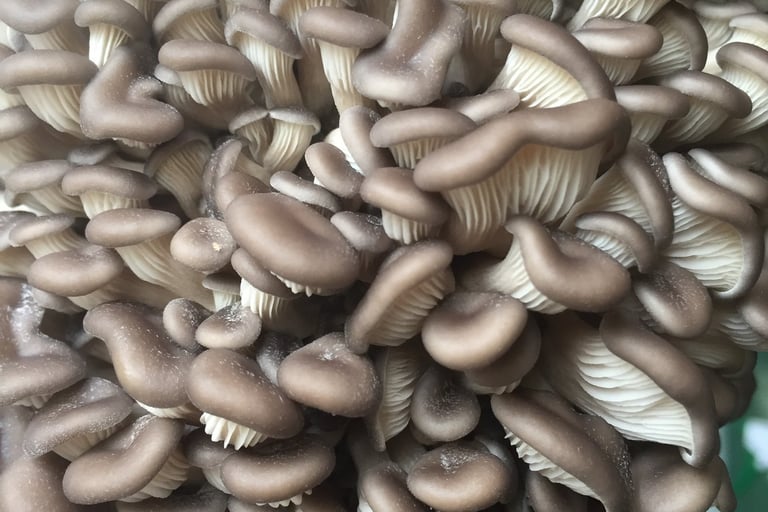
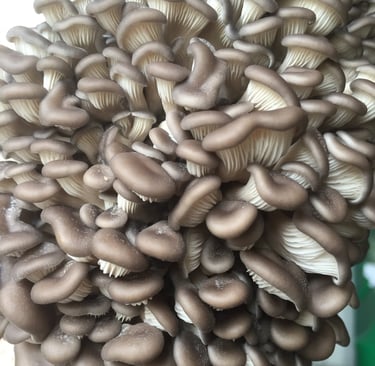
Winter oysters (Pleurotus ostreatus) grow well at cooler temperatures (10–20°C).
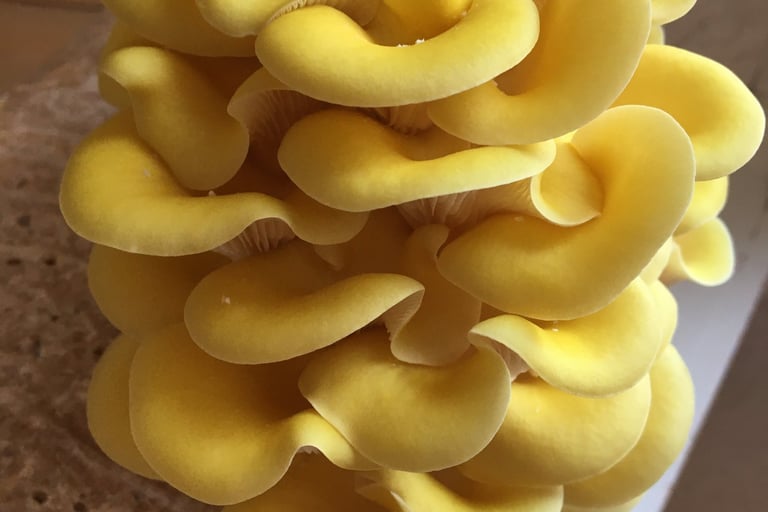
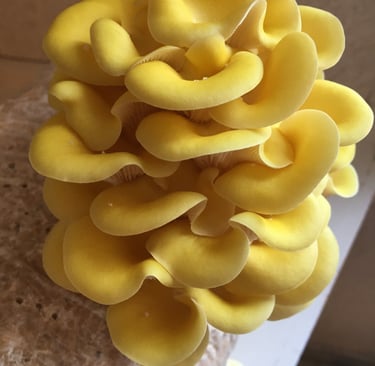
Pink or golden oysters (Pleurotus djamor) prefer warmer conditions (25–30°C).
3. Fast growth cycle
Oyster mushrooms have a rapid growth cycle. From substrate inoculation to harvest, it can take as little as 2 to 4 weeks, depending on environmental conditions and the variety.
This allows for quick and regular harvests, compared to other mushrooms that may take months to fruit (e.g., shiitake).
4. Easy fruiting
Oyster mushrooms produce fruiting bodies quickly and abundantly, even without very strict growing conditions. They generally require:
A humid environment (80–90% relative humidity)
Good ventilation to prevent CO₂ buildup
A small amount of indirect light (no direct sunlight)
Unlike some mushrooms that require precise light control or temperature shocks, oyster mushrooms initiate fruiting quite easily under simple conditions.
5. Low risk of contamination
Although all mushroom cultivation is sensitive to contamination, oyster mushrooms grow quickly and colonize the substrate faster than most contaminants.
This reduces the risk of unwanted organisms taking over before the mycelium establishes itself.
6. Simple equipment and techniques
Compared to other mushrooms, oyster cultivation does not require complex equipment or strict sterilization.
Simple methods such as substrate pasteurization (heating straw or sawdust to eliminate harmful organisms) are often sufficient, unlike species like shiitake or button mushrooms that require full sterilization.
Additionally, oyster mushroom grow kits available on the market are beginner-friendly and require minimal care.
7. Resilience
Oyster mushrooms are relatively resistant to diseases and fungal infections compared to other species.
This resilience allows beginners to make small mistakes without losing their entire crop.
8. Profitability for producers
Due to their fast growth, adaptability, and ability to grow on low-cost substrates, oyster mushrooms are economically attractive.
Growers can achieve high yields with relatively low investment compared to more demanding mushroom species.